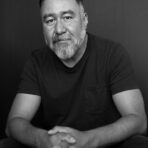
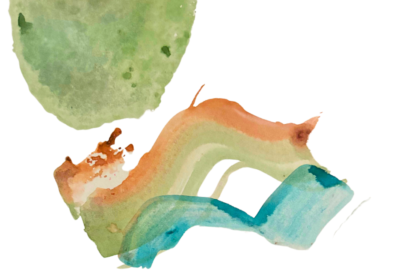
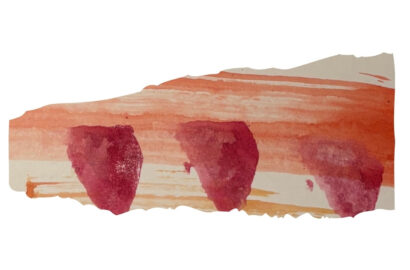
Introduction: Dominique Moody works at the intersection of assemblage, performance, and life. Her work is part of a long-standing tradition of sculpture and assemblage with roots in the mid-twentieth-century history of South Los Angeles. Noé Montes is a Los Angeles-based interdisciplinary artist who works with underrepresented communities to effect change through art making and education to address social, economic, and environmental issues. Dominique and Noé met in 2023 as members of the first cohort of the Los Angeles Department of Arts and Culture’s Public Artists in Development (PAiD) program. This interview is part of Noé’s ongoing work to address the omission of marginalized communities in American history. Dominique’s work will be featured in an exhibition at the Armory Arts Center in Pasadena in the fall of 2026. This exhibition is part of the year-long city celebration for the centennials of Route 66 and the Colorado Boulevard Bridge.
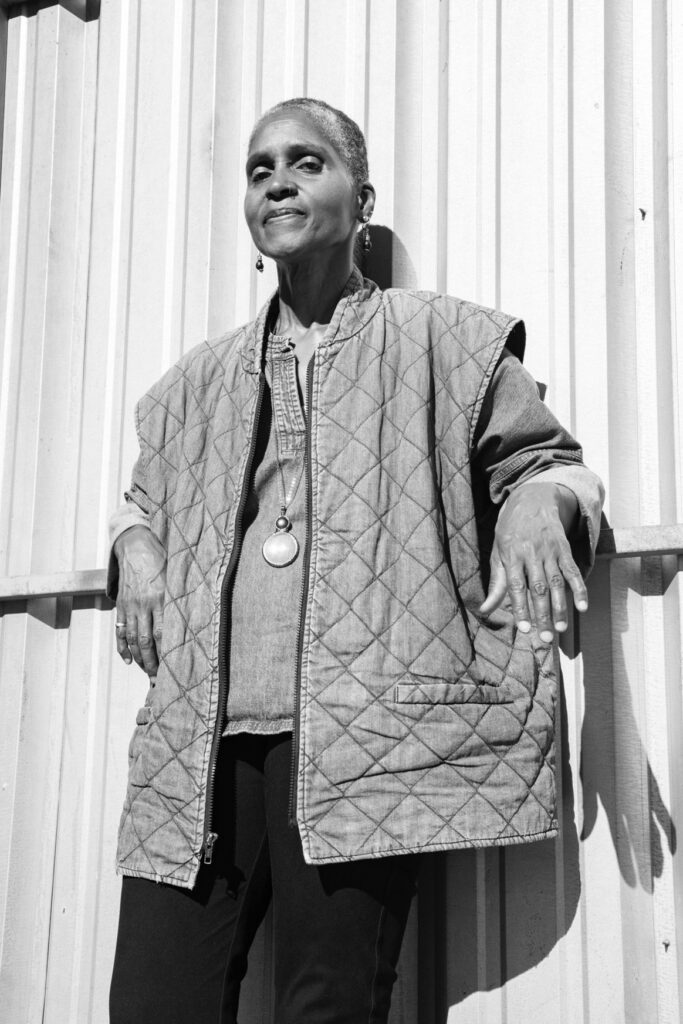
Noé Montes
Okay, so we’ll just start with your name and your age, if you don’t mind.
Dominique Moody
My name, Dominique Moody. Full name, Dominique Faye Moody.
NM
And you are an artist here in Los Angeles?
DM
Yes, I’ve been in Los Angeles for the past, definitely going over twenty-five years. And this year [I] will turn sixty-eight. I’ve lived in a lot of places, but Los Angeles really attracted me in a unique and serendipitous way that I didn’t expect.
NM
And this interview is taking place in your studio, which is located in South Los Angeles?
DM
Yeah, it’s considered actually a historic [area], South Central LA, which is really interesting because South Central encompasses quite a bit of Los Angeles, but there was a real fight a few years ago to rename it and drop the Central part and just refer to it as South LA. And many people within the community felt that that was a form of erasure of the community and that its centralization to the city was very important to its history. And so, this community retained that designation because it was determined to be a historic community.
NM
And if I remember correctly, the effort to take away the Central from the name South Central was because of its negative connotations around the uprising?
DM
I think its history in general. Yeah, because, of course, it was defined in a redlined way in terms of who was living there, the demographics, the economic struggles that people had within certain communities. Of course, it got tagged on as part of the gang-related territories in these very negative terms. In terms of looking at the social dynamics that may have created these structures. That instead it was just because of those certain kinds of people living there. And gentrification and the fact that this [community] is surrounded by a major university, the Exposition Park. And areas that wanted to revamp how people then perceived this place. So, I was hoping to be able to find a studio in LA. It took ten years because of the cost and rates for leasing and renting of workspace, let alone any kind of live/work space. And that put me outside of that market. But I knew if I could come into a community that still wasn’t fully gentrified, that I would have a better chance of being able to afford living or working in that community. And so, this came up serendipitously through my Made in LA exhibit, where I met Skyra Martinez, another artist, an assemblage artist. And she managed this incredible warehouse space.
NM
Fantastic.
DM
And I was invited in, which is such a wonderful feeling to be invited somewhere, and where the dynamics are more about the relationship and connection and community that one has. And so, I’ve ended [up] here.
NM
You’re here now.
DM
I’m here now.
NM
Where are you from originally?
DM
I am from so many places… This is almost my fiftieth address that I’ve had in my life. I was born in Augsburg, Germany, as the child of two African-American parents. And it is… It’s a little hard for me to describe kind of where that is. But, you know, we lived in Frankfurt. I was born within the first year that [my parents] were there. Military family. So, a tour of three to four years. We lived in Frankfurt, Munich, Augsburg, and in… I will have to get you that last… It’s a German name, so I want to make sure I pronounce it properly. So, living in four places in four years.
What everyone assumed is that, okay, that’s the military life. But we also lived there as expats. My father actually left the military while still in Germany, which was unusual. And very rarely do families go, but he was an officer. And he could choose to take his family. This was in the mid-to-late ‘50s. And he made that decision because he felt that things were so toxic here in the States. That as a black man, even as an officer in the military, that he was going to be limited. They were able to navigate going from base to base [by living] in a trailer. Starting in the 1950s. This was very unusual. This was not your typical experience, even as a military family, let alone a Black military family.
NM
And that was here in the United States, even before [they] moved to Germany.
DM
Before [they] went to Germany. And so, he had aspirations. His first assignment was as a recruitment officer in the South. So here’s someone who grew up in the Northeast, in Pennsylvania, going to the Midwest. And now having to address the cultural sentiment of the South. So, his preparation [included being in] a trailer where he could navigate around the segregation walls. Didn’t have to ask for a place to sleep or eat or use the bathroom. I find that story of my family to be pretty phenomenal. I think it laid the groundwork.
So, my first conscious memory is leaving Germany as a four-year-old. And going through the military [system] to return home. They used commercial flights, but it was all military-occupied in terms of people on it. It was, to me, uncomfortable because I did not like the presence of the uniform, the military, even at that age. And I couldn’t articulate why. But it made me uncomfortable. So, I looked out the window of the plane the entire time.
NM
So, where did you guys land?
DM
We landed in New York at Grand Central Station. A family of eight. And three of the youngest ones in these baby harnesses because [my mother] didn’t want to lose anyone. And to be in that incredible station with all of the New York energy and activity around us. And because it took so long for us to get there, we actually started our journey on New Year’s Eve and also ended on New Year’s Eve.
NM
You traveled in time.
DM
Right. And that whole experience had a real visceral effect for me that is lifelong. I loved it. I loved the way it felt. I loved being in a plane. I loved the movement. I loved seeing the constant shift of new things that were never before in my experience.
NM
It sounds like you had a feeling of not being anchored to time or to space. And that was, I imagine, very interesting.
DM
Very interesting. And how that shapes someone. Right. And it’s my first visual memory. Germany was visceral. It was about feeling, smelling, hearing, and having those be familiar. But very little imagery. Being on that trip, coming, had all of the imagery. Those things seeded something in me. Because I’ve been creating art ever since.
NM
So, eventually, did your family settle in one place for a longer period of time?
DM
Northeast Philadelphia. You know, all around that city. We ended up in these very old houses because they had to be large enough to accommodate a family of eleven. The ninth one was born once we got back stateside. And it was a struggle. [My father] was very proud of his accomplishments, but he was truly daunted by the limits that were still existing. He didn’t want to work for somebody who would belittle his abilities. He wanted his own business. He was a supervisor in many companies. He took unusual positions as a Black man and sometimes he got a lot of pushback and backlash for that. But he was a man of his own mind. Our mom, you know, raised her children to be really free thinkers because they had to constantly adapt to this movement. To these cultural shifts.
You know, we were wearing lederhosen and what we referred to as “Heidi dresses” in 1960s America. We were completely confusing to most people… In order to accommodate that, I started drawing because I felt that art would articulate something I could not [otherwise].
NM
So you started drawing. That was your earliest form of expression.
DM
Yes. I was put into kindergarten very early, especially for the time. And they didn’t have preschool back then, so I went in at the age of four because they wanted—not my parents, the school system—wanted to correct my use of mixing German with English. So it was an issue of culture. And assimilation. And I felt that keenly. [I went] in at such a young age, but I was tall. I was actually taller than my kindergarten teacher. So all of these things started to shape my desire to be in a world where I was either completely invisible or too visible and stood out. But when I made art, all of a sudden people noticed me. And there was a shift in how people would respond. And I felt I could be visible in a very positive way and actually help people know who I am.
NM
So that was the beginning of your interest, of your seeing that art was a way for you to be in the world that was conducive to what you might want, even though at that point you didn’t know what it was.
DM
I wasn’t sure what it was. But within the family, we were all encouraged to do that. There was a definite openness. And my parents were very creative. In Germany, they did Fasching, which is like Germany’s version of carnival. It’s like a masquerade and people wear costumes. My parents made their own outfits. And they ended up being photographed not only because they wore these amazing costumes, but because they were Black people in this very monocultured society. And so I think from that, they felt at ease with their children expressing [themselves] in these different ways.
NM
How did you then go about cultivating that? And at what point did you feel, or do you feel now maybe, that you were doing that intentionally?
DM
One thing we were told, because our economic situation was always a struggle, which we didn’t always realize as children: there is a difference between having certain kinds of aspirations and what that actually looks like in your pocket. And we weren’t masking it—we were often living below the poverty line. It’s just we didn’t feel we always had to live in a certain way.
NM
It wasn’t defining you.
DM
Right. We always had something to eat. Sometimes it was the same thing for days on end. But we knew we wouldn’t go hungry. Our clothes were always used, but they were clean. And our house had to be always organized and clean. One school that I went to, the first predominantly Black school, was actually a really good elementary school. But then they mandated busing after I went to that school. And so I got torn from there because I passed the assimilation test, which I thought was horrible. I told my mother, I thought it was horrible. I was about eight years old. And I said, you know, I felt that the test was unfair.
NM
Was it a written test?
DM
Yes. They evaluate all of your skill sets, and also your family background and history. And they presumed that because I had lived in a European city and been surrounded by that culture, that I would be better prepared as a Black child going to an all-White school.
NM
I imagine that they also did an evaluation of your physical appearance, even though it might not have been an explicit part of the test.
DM
Right. It was all of those things. And I felt it keenly. I didn’t understand. At the same time, you know, we listened to Martin Luther King and the speeches, and we understood about wanting integration. But integration and mandated busing did not align because we were being pushed out to a school where we had no connection to a community. Before we went, I went to the Philadelphia Museum of Art with my Black classmates and teacher, and she showed us the artwork of Henry Ossawa Tanner. And she didn’t have to say, and it was never notated in the information about the artist, but she stated, this is a Black man who did this artwork. And I couldn’t believe it. I was like, I was standing in front of “The Banjo Lesson.” And it’s a big painting. Basically life-size. And I’m standing in front of this at the age of, you know, five, six years old. And I’m looking at this, and I can completely engage the familiar. This little boy is about my age. And this older man is like his grandfather, and he’s teaching him how to play this banjo. He’s teaching him the richness and legacy of himself, but also a whole history in this banjo. I loved it. I felt immediately: so this is what it means to be an artist.
NM
So that was a very important moment in your journey as an artist, an early moment. Skipping ahead some time, did you study art formally eventually?
DM
I got into all kinds of programs because economically we couldn’t afford to do so. And there was this whole adage in the family, if you really want to do something, you have to find a way to do it, even as kids. And so I found ways to, you know, go to art schools, and I would do artwork so that I could get like a, basically, it’s a form of a grant to go to the art school.
NM
So you were actively pursuing it. Around what age was this where you were applying to things and going to these schools?
DM
Elementary school. Very early on. It kind of got sparked by going to an all-White school. And my teacher, my home teacher, this was not only an all-White school, but it was an all-Jewish school, the Jewish community.
NM
Was this the school that you got bused to?
DM
One of them, yeah. And my home teacher was the art teacher. She picked up on the skill set right away. And what I think is important is just how much I did at home in my own education. And that is, I drew the portraits of my siblings. I drew anything that wasn’t nailed down, even some of that stuff. I drew the hallway. I drew the window in my bedroom. I drew whatever I could see.
NM
Drawing is also the most accessible of art forms.
DM
Yes. And I used very rudimentary stuff. I used a number two pencil down to about that big, you know, with no eraser and just a little nub. I used my crayons. Nothing fancy. Right. But what I did with that pencil, our teachers were astounded. The gradation and using different sides and edges. And so they felt I was highly lacking in medium experience, but incredibly gifted in terms of dedication and determination and the ability to see it.
NM
Did you go to college eventually for art?
DM
Yes. And so throughout high school, I prepared my portfolio. Once again, all of the family, all of the children were told, if you want to pursue this, if you want to get into college, you have to find the way. So my brothers got into Dartmouth College, scholarships and football. And my sister got into Cooper Union in New York. I used to travel up there to hang out with and visit her. I was between the ages of thirteen and fifteen doing that and taking the train. So here was this whole family trajectory of going out there and trying to pursue our desires. I could not go to Cooper because these were the first wave of Black students. And so you could not follow in the shoes of a sibling, especially to a school that was completely tuition-free.
NM
So it was a very limited opportunity that they were giving. I imagine that they were saying that they were giving opportunity.
DM
Right. But it was considered nepotism for me to follow in that footstep. So I went to Pratt. Pratt is a private art school and it was very expensive. But I got in, I had a partial scholarship, but I had to make up the rest. I was sixteen, so I had to get what was called an emancipated minor documentation. And that was a release from my, at that point, my sole parent, which was my mom. My father was no longer in the picture. I got released under the host of my older siblings. So I moved to New York and ultimately got my own apartment. But I had to work to make up the difference of what the scholarship could not do. And I could barely do that on $1.25 an hour in New York City.
NM
What kind of work were you doing?
DM
I did everything. I would go into stores and I would tell them what I could do because I didn’t have a resume or anything. And I said, I can do store display. I can create an environment. And I would often do a free week and basically create a job that they never even thought that they needed, but all of a sudden realized that it was valuable. But the wages were low. And so I did a full time, a part time, and a freelance. I mounted butterflies as my freelance for natural history museums and a collector’s store. That was in the mid ‘70s, 1974 to 1976.
NM
What degree did you get at Pratt?
DM
I did not. I couldn’t complete. Within that first year, the tuition increased and that very delicate balance for someone who was working under age, often working under the table, put me in a position to not be able to make up the difference. I wanted my passport because my sisters were traveling and they were going to the Caribbean and doing their artwork there, dance and photography. I wanted to be able to travel once again, hearkening back to that very early sense of being. And they told me, your documentation is incomplete. And if you were born out of this country, that should have been completed. I said, I have two African-American parents and one in the military. I said, how can that be? They said no one else was turning four when they came in. There’s an age cutoff. And so they said, if you don’t have documentation and if you haven’t kept up your citizenship for Germany, you are at this point undocumented because you’re not an American citizen and you’re not a German one.
NM
So you weren’t able to get your passport when you graduated.
DM
No. It put me in an even more vulnerable status as an emancipated minor in New York City trying to work. I had to leave school and then just try to make it. But New York itself was an education, a very hard one, because in the ‘70s, New York was nowhere nice at all. And it was really a miracle that I survived it. I had my own apartment, had to have that responsibility. But I could not divulge my true age to anyone. I definitely looked underage. But people bypassed it because they could get work out of you.
NM
So you stayed there?
DM
I stayed until I couldn’t. And I knew that I needed to make another choice. My family was shifting from being on the east coast to the west coast. My mom and sister moved to San Francisco. And they said, it’s a different world out here. In a good way. They both got really good jobs within weeks. They found good places to live.
NM
So, sounds like you moved to San Francisco.
DM
Yeah. Coming cross-country by car. In about 1976. And feeling it’s a new adventure. And once again, this whole idea that when you shift and you adapt to a new place, and you bring all of that experience with you, I certainly knew that San Francisco and California were nowhere near the intensity of New York. And so I felt if I could survive New York, I could certainly survive Northern California.
NM
Were you able to continue your artistic development?
DM
Not initially, I just had to get a job. I got hired where my sister was working. But once again, there was always this creative vein. I created a resume, by the way. But it had on there things like butterfly mounting—most people had no idea what the heck is that, you know. But it opened up an idea and a question then that people had, prospective employers, like, what is that? What kind of skills does it require for that? I ended up creating the majority of my own [jobs], even though I was being employed by someone.
NM
So, you got to San Francisco, established yourself, got a little bit of stability. And what was the process of getting from there to here?
DM
The big pivotal moment was I started shifting into more creative [financial] work. I was a custom framer in a gallery. I was also a designer in a stained glass shop. It was almost sweatshop production, but it allowed me some space to do some design work in a very unusual medium. But the big moment was when I got fired from that custom framing job. And I didn’t quite understand why. And it was during the height of [the] AIDS [crisis] having just this tremendous impact on the Bay Area and the gay community there that I worked in. And so people were hypersensitive. I didn’t know it then, but my eyesight was diminishing to the point where I could not recognize people I knew. And even that second of delay of a familiar response made people uncomfortable.
NM
Made them think that maybe you were sick.
DM
Right. Yes. And so therefore, the owners of the business that had hired me fired me because they thought as the only Black [person] and the only Black woman and the only Black straight woman in this business that I was offending the large clientele. My sister also left New York. She had gone back out to New York, came back, and we both ended up on the same day without jobs and knew that we were kind of in trouble. We had to figure this out really quick. I told her to come out. I had a great apartment. Right next door to the gallery. So we went to dinner with our mom and our mom said, you have more creativity in your smallest finger than anyone that I know and you should do something with it. And so we created then and there this idea called Odd Jobs. We posted flyers all around Haight-Ashbury. We never advertised again in six years. And from that point on, we actually could choose to do certain projects. We did everything. But we did all of this work that historically has been deemed, you know, the utmost thing not to do as a person of color, and particularly as a Black person. Clean someone’s house, fix it up, organize it, walk people’s dogs. And we completely turned that upside down, where we refused to take any amount less than if we were working at a law firm. By pulling our resources together, by living and sharing our space, we could do this work. We did it without a car for six years.
And only in that last year did the issues with my eyesight start to manifest fully. I was the detail person. I used to be able to tell the difference between a commercial can of paint, whether it was flat or gloss or exterior and interior. I painted the Waters restaurant, Alice Waters, and I painted it with flat instead of enamel. That was a problem. The whole back interior. And so we realized there’s definitely something going on. And I had to go to a specialist. This is pre-health insurance. And we were entrepreneurs, so we didn’t have that kind of generated income. So they found that I had this very unusual, rare condition in which I was losing all my central sight. It was most common amongst adolescent boys who were either Amish or Mennonite. I certainly was neither of those.
But Coatesville is right in the midst of Amish country. And the fact that most African Americans, after the slavery trade was abolished, there was in-country slave production, which is breeding. This is a genetic disorder. And what had been very common from the South all the way up to places like Pennsylvania and certainly Virginia was that they bred the enslaved people on their plantations in order to create more. And that means you’re overlaying a lot of people into the same gene pool over and over again. You were also isolated; you had no agency to leave these areas. And so this kind of ancestral legacy led to [this condition] coming into full bloom. So it was on both sides of the family.
NM
So, it wasn’t an anomaly. There’s a genetic reason for you to have this.
DM
Yes. But it was still unusual to have it. They don’t do enough research on it because it doesn’t hit enough people and especially certain people. And so you learn to live with it. Now, I had been adapting all my life. It just became another adaptation. But I knew then that at this point, this is where I’d make that big giant leap and test this because the aspect of having vision and vision loss for an artist is always dramatic because that’s your tool. And I had to learn really quick that there was a deeper element of being an artist that was not exclusive to sight. And that was artistic creative vision. What was the more difficult thing was to be deemed with what was seen as another negative strike. To be a Black person in the country, to be a woman, and to be economically, you know, on a lower scale. So all of these things ended up with me feeling I needed to turn this around and make this into the strongest asset I had.
NM
At that point, you thought of yourself as an artist?
DM
Always. Always. From that time when I saw that painting.
NM
So you were already in that space of considering that to be your life and your identity.
DM
Right. And the only options they had once you get placed in the pool of a disability, there are certain kinds of systems that come into play, and part of it is what they consider rehabilitation programs. But they weren’t taking into account the tremendous work history that I had already had. It almost all became discounted. They wanted to offer me these very, I would have to say, kind of low-skilled programs, and I pushed back on that. And the other option for men, not for women, women got the programs, and men, now this is in the ‘80s, and men got the opportunity to go back to school. But I had known that with my name being Dominique, in America, that is actually more commonly a man’s name, so I would get mail all the time that had misinterpreted and presumed that I was a mister rather than a miss. And so I decided to allow that misnomer. I got sent to a program that was usually placing men who had had some education to go back to school as disabled students, and I got into Berkeley. It took me six years. They wouldn’t accept any of my prior, none of [my records from the] Philadelphia College of Art, where I was eleven, twelve years old, doing college-level art, none of Pratt. I had to start from scratch. But I could go into a one-on-one drawing class and have this visual impairment and be able to draw the figure in a way that no one else in that freshman class could. And I was actually then asked to be put out of those classes because it disrupted the class. The professor said, you know, you could actually teach this course. So what I ended up doing four out of the six years, four-and-a-half years, was I did independent study.
NM
You eventually graduated from there. And was it a fine art degree?
DM
Yes.
NM
I’m going to skip way ahead to now and ask you about your work and your practice as an artist. So what is your medium? How would you describe it?
DM
My medium today is called assemblage. And particularly in Los Angeles, it’s referred to within the assemblage community of artists as assemblage as opposed to being referred to as assemblage [French pronunciation].
NM
There’s a distinction?
DM
I didn’t know at first, but when I came to Los Angeles and I would be just having conversations with other artists, they would laugh at me every time I said it. And they said, you know, the way we think of it here, and a lot of people who are here are from the South, and they migrated as part of that last great migration. And they said, we never felt that the materials that we find and rework into art had to be elevated by putting a French accent on it. By using just the common phrase of “assemblage,” that’s what you’re doing, you’re taking objects and you’re assembling them together. And that is real beautiful work.
NM
And what are the materials that you work with?
DM
Anything and everything. And that’s what I love about it. I think it was a great tool, material choice for me to go into because of the nature of my sight. Drawing and painting were really limiting with this altered sight. And so assemblage pushed me, collage and assemblage, pushed me into using objects with details and narratives that already exist. And I can then create new narratives from that. And I fell in love with it immediately. It related to so much of my own personal history. And as my eyesight changed, I was always pushed because I was always finding new materials. So the skill set was always having to adapt to the material.
NM
So given that the materials are completely open, are there certain objects or patterns or textures that you have gravitated to over time, maybe repeatedly?
DM
I’m at the tail end [of being a boomer]. So there were certain materials used in the ‘70s, it was junk art. After the uprisings in Watts and artists like John Outterbridge and Noah Purifoy, they used the most amazing raw materials. They salvaged metal and signs and parts of cars and they’d be rusted. And the kind of thing that you would see put out as salvage, number one, you could find it on the street. It wasn’t taken in yet as salvage. It was junk! And so they even referred to it and celebrated it as junk. I’m in between that because I love patina, I love the rust, I love the wear and tear on wood. The natural. But we are in an age where a lot of that natural material has now been absorbed, now been found aesthetically pleasing. And so it’s been snatched up. You don’t find junkyards, you certainly don’t find them much in the city. And what you find on the street are the new waste materials, the plastic, the rubber, the digital technological stuff. And you’re like, what am I going to do with this stuff? So I find ways in which I bring those things together. So I might find this window on the street, an old wooden window that reflects the beautiful old buildings. But I also found a piece of salvage plastic. So I will bring those two things together. And I started creating transparency collage because I was actually seeing things in layers. I was looking at my old slides, old school, before digital, and it would jam up in those little carousel machines. And I would see all these layers of pictures. It was beautiful. And I was like, well, let me recreate that in a bigger way. And so I did these pieces where they, in a place like California, especially Southern California, where the film industry and the influence of the aesthetics of film are so powerful that doing collage on film, on veneers of acrylic sheets was phenomenal because it was like, it’s still but it looks like [moving] film. So I started to really love both, not just the found, but then the unorthodox. The things that were never considered art materials. The hardware. My hardware store is my artistic candy store.
NM
And then a little bit maybe about your process. I mean, you already talked a little bit about it, but how do you actually assemble the things?
DM
As my eyesight required the larger scale, my work got ever larger. I also felt that I was encompassed by them as opposed to just outside of them, making them. And so I had the skill sets from my childhood to my adulthood to being an entrepreneur with a business where we had to learn new skills all the time in that process of building. And I realized that in many ways I would be capable of building something that I could live in and that one of my desires is architecture, but I love architecture the most when it tells a story. And so I started bringing in the methods and the aspects of the built environment. And by using then the hardware and those tools, and the tools were a lot less art, a lot less artist paintbrushes and easels, more pallets and dollies and drills and mechanical tools. So my tools were embracing that, they were more common, and they were common in the workforce too. And so all of those aspects started to build this kind of new aesthetic for me which was the built environment, installative, assemblage art that was narrative and often figurative.
NM
Complex layers. And you’ve spoken about this a little bit throughout our conversation, but if I were to ask you what are the themes of your work more explicitly, although of course they’re not simple, but how would you describe the themes of your work?
DM
Today the themes of my work are about placement. How people respond to it, to the work in a way that they are able not only to appreciate the narrative that the piece is speaking to, but they start to recognize their own narrative in it, in that experience of engaging with a piece of art. That is when I feel I have truly created something, is when someone comes to me and they tell me the impact on this was that all of a sudden they saw their own story in a particular way.
NM
So that’s a little bit of a theme and a little bit of a function of the work.
DM
And I never expected my art initially to be functional per se, but I’ve always loved the idea of functional art. When I was at Berkeley and doing my independent studies, I looked into all the art expressions that are not accepted by the arts community as such, and definitely not then. And that was art of the mentally ill, art of children, the art of the disabled. I was being lumped into those categories out of—not necessarily my choosing, but I started to explore what those were, because even some of the great artists, like Picasso, would talk about the first half of an artist’s life, they tried to get to this point of mastery. The second half of an artist’s life is they tried to get back to what they did as a child. And that was because there was this sense of freedom, that there was this sense of, you did it because there was a need and desire. You weren’t doing it as a way to prop up someone else’s whim, whether it was a gallery or an art group.
NM
You weren’t doing it as a way to fit into society within the parameters that they prescribed.
DM
Right. So I have artwork in my archive that dates back to the age of eleven. And I’ve held on to it, even though it’s a skill set, the drawing, the detail, that I can’t quite do anymore. I felt that I wanted to be reminded of this kind of—sometimes people see this word used in a very negative way—but this innate desire to look at the world around me and to articulate it into a visual narrative. And that to me is really powerful and I cannot imagine my life without that practice.
NM
And that’s actually a good prompt for my last question, which is, how do you think about the relationship between your art and your life?
DM
I have grown to recognize that for me, there is no separation and no distance between the two. And that has been a struggle because the art world does [separate them]. It sees them very differently.
NM
In your case in particular or for artists in general?
DM
I think in artists in general, but definitely for mine, I sense a great confusion in terms of how they understand this work that I do today. They want or need to see a delineation between the two. But that’s because I feel that art has become commodified as a product. Art is perceived today as a business, a creative business, but still as a business. And I understand the need to bring artists into being looked at in more favorable ways as a profession, as an honorable profession. But to me, it doesn’t fit the model of a business because your bottom line in a business is that you’ve got to make a profit. And so much of the work that I’ve had to do over the now fifty years of creative work does not fit that [bottom line]. But what it does fit is an extraordinary practice. And that fifty years should be perceived as having great value whether or not it made some kind of exceptional profit. My bottom line is never whether the work will sell. My bottom line is, can this art move somebody?
And that’s why my work is much closer to being part of social engagement, social practice. But I think it’s very hard within the more structured art world to fit into that. And I want my art to be responsive to my life. I feel I have an incredible story to share. And my art shares it. I’ve had to reconcile with the struggle of what that means. And how that has placed me in certain kinds of marginal ways. But I also feel I have an obligation to the work itself and to that practice.
Editor’s note: this interview has been edited for clarity.